
Freedom in practice
The refounding of the Círculo de Bellas Artes after the dictatorship (1983–today)
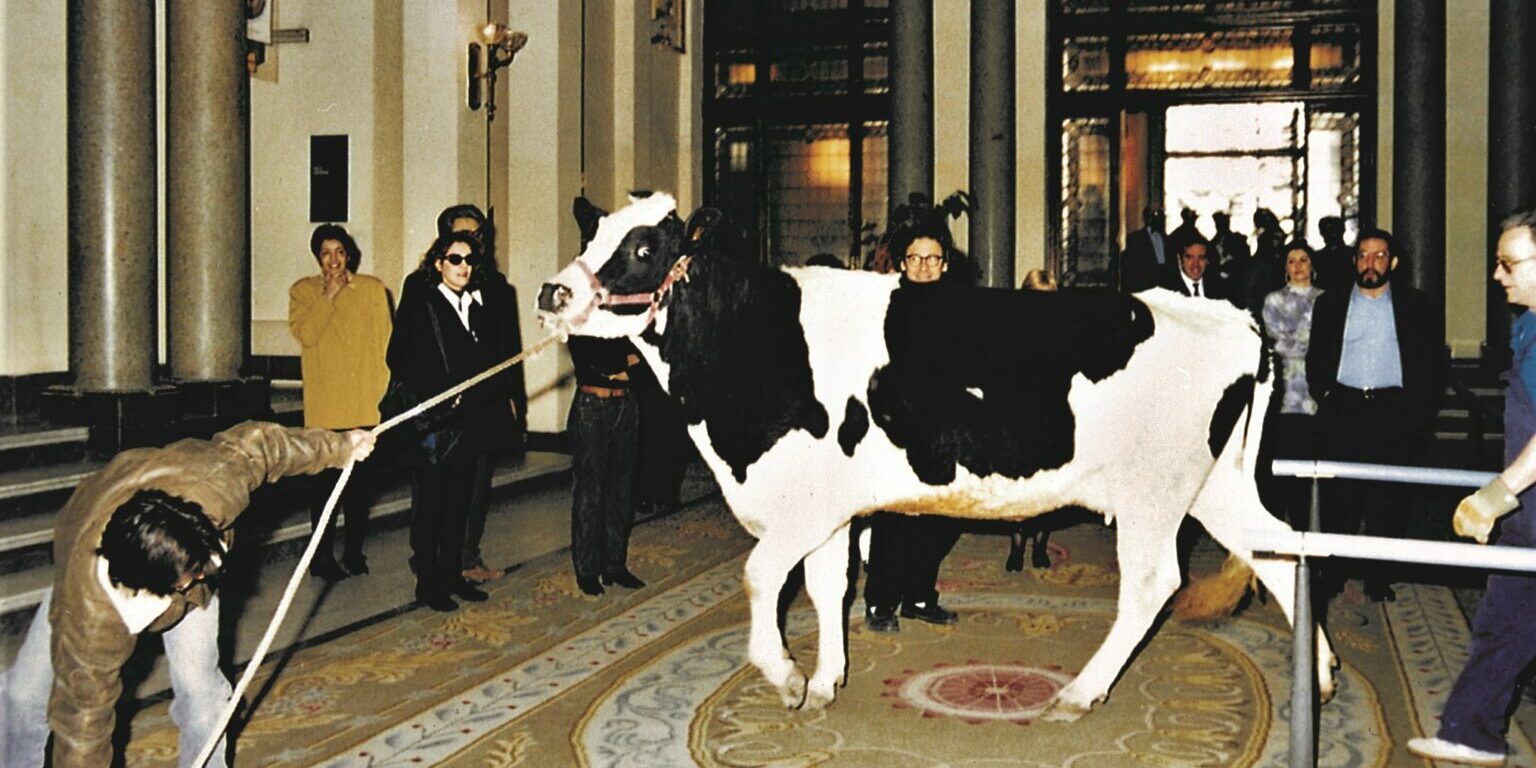
When Spain recovered democracy, its cultural institutions had to learn what freedom meant in practice. In 1983 the Círculo de Bellas Artes in Madrid, a nineteenth-century association, was close to collapse. During the dictatorship it had lost its purpose as a “house of the arts” and become little more than a social club. It was overwhelmed by debt, works from its collection had been put up for auction, and its staff had announced an indefinite strike. What followed, revisited in 2026 in the exhibition Eclosión. El Círculo de Bellas Artes en los 80 y 90 , curated by Oliva María Rubio,as part of the centenary of its building, was one of the most significant institutional transformations of Spain’s democratic transition.
Handing the institution back to artists
The response was a change in who governed the institution. The new board had to be made up of artists and led by a president of recognised standing. In 1983 a board chaired by the sculptor Martín Chirino took over. It brought together figures from every discipline and, for the first time, included women. It worked on two fronts at once: financial recovery and repair of the building, and a programme that would place the Círculo at the centre of the country’s cultural life. The new period opened on 31 May 1983 with a public celebration, the Fiesta del Resurgimiento, attended by some 4,000 people.
Freedom as a method and a subject
The first expression of that freedom was a way of working. In the Talleres de Arte Actual, an established artist taught students of their own choosing for four weeks, working side by side without the constraint of rigid academic rules. The workshops were deliberately plural, and soon extended to photography, video, architecture, literature and music. The programme also took up questions the new democracy had to face. El cuerpo. Escenarios para la libertad (1987) brought international thinkers to Madrid to reflect on the body at the height of the AIDS crisis. El sueño imperativo (1991) rethought the relationship between art and politics from an “ethics of resistance”. The Círculo also opened up to disciplines that had received little attention in Spain, such as video and photography, and to artists and thinkers from abroad.
What freedom did not guarantee
The transformation relied on support from the Ministry of Culture and on the climate of freedom that came with democracy, but it did not bring stability. Volunteer enthusiasm soon proved insufficient, and from 1985 the Círculo built a professional team organised by areas. A renewed financial crisis suspended the magazine Minerva in 1985, after eight issues. In 1993, when another crisis threatened to paralyse the institution, the Círculo answered with an open call, Cultura Crisis Cultura. Esto no es una crisis. Almost 400 projects were submitted, and for six weeks they filled the whole building.
A model that continues
The model built in those years still shapes the Círculo today: a private, non-profit institution whose daily programme crosses disciplines and remains open to contemporary debate. Since 2005 that openness has also taken a European form through Casa Europa.
Video testimony: Juan Miguel Hernández León, President of the Círculo de Bellas Artes (2026)