
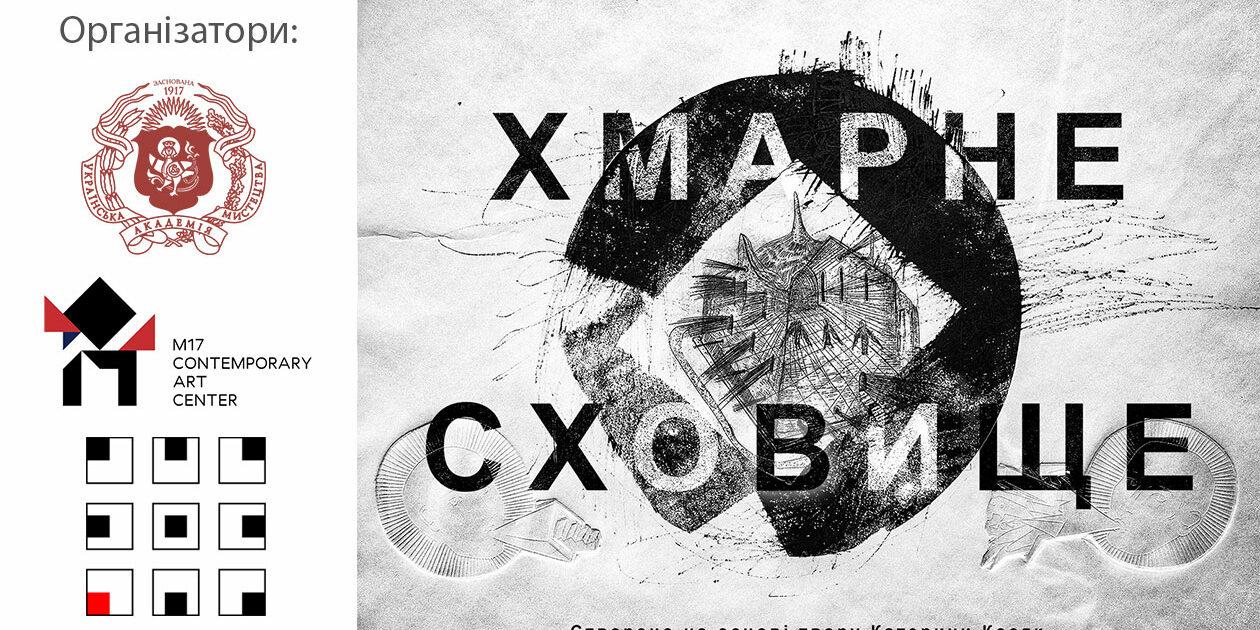
Cloud Storage is a large-scale inter-institutional exhibition project presented within the 17th Platform of Cultural Initiatives New Directions. It brings together the National Academy of Arts of Ukraine, M17 Contemporary Art Center and the Modern Art Research Institute of the National Academy of Arts of Ukraine. The first of the project’s three Kyiv venues opened in the Grand Hall of the National Academy of Arts of Ukraine on 27 February 2026, followed by presentations at M17 and the Modern Art Research Institute. The project was curated by Andrii Sydorenko and Iryna Yatsyk.
Can memory be stored?
The initiative examines how art can help society reflect on the past when historical experience and collective memory do not develop in step. It addresses the fragility of cultural heritage, the impact of war on the formation of new memory in Ukraine, and the limits of digitising human experience. Its title refers to the idea of cloud storage while questioning whether collective memory can ever be fully uploaded, duplicated or protected as data. Archives can be digitised, but memory also depends on interpretation, shared experience and the choices communities make about truth, loss and responsibility.
Memory under attack
This question has immediate significance during Russia’s war against Ukraine. Cultural objects, archives and institutions remain vulnerable to physical destruction, while lived experience is dispersed among people and communities. The project argues that collective memory cannot be destroyed by missiles or drones because it is not confined to one archive, trench or shelter. It persists wherever people remember who brought war to Ukraine and the price at which freedom is defended. In this sense, exhibition-making becomes both a form of public reflection and a strategy of cultural resilience.
A decentralised platform
Works were selected through an open call that received more than 600 applications from artists in Ukraine and abroad. By distributing the project across three institutions, Cloud Storage creates a decentralised platform for artistic voices and connects research, exhibition practice and public dialogue. It shows how cooperation between cultural institutions can safeguard plural perspectives, strengthen solidarity and keep contemporary Ukrainian art visible during wartime. Admission to the Academy venue is free, supporting broad public access to this conversation.