Art as a Form of Resistance
International cultural strategies during the war in Ukraine: the curatorial practice of Iryna Hrytska (2022–2026)
Since Russia's full-scale invasion of Ukraine in 2022, Ukrainian cultural workers have faced destroyed infrastructure, displacement and shrinking resources. In this account, written after the Re:Create Europe residency in Malta, independent curator Iryna Hrytska describes how she has used public space, strategic communication and partnerships across sectors to keep Ukrainian art visible and build solidarity across borders.
As an independent curator, cultural strategist and communications specialist, I develop project concepts, identify suitable partners and coordinate implementation. My approach combines three channels: Ukrainian civil-society and diaspora organisations abroad; socially responsible businesses able to contribute infrastructure, funding or communication platforms; and international cultural institutions such as the Goethe-Institut. European support opportunities, including Culture Moves Europe under Creative Europe, also help enable mobility and exchange. When partners initiate a collaboration, we develop its concept and agree on roles and responsibilities together.
Ukrainian art in public space
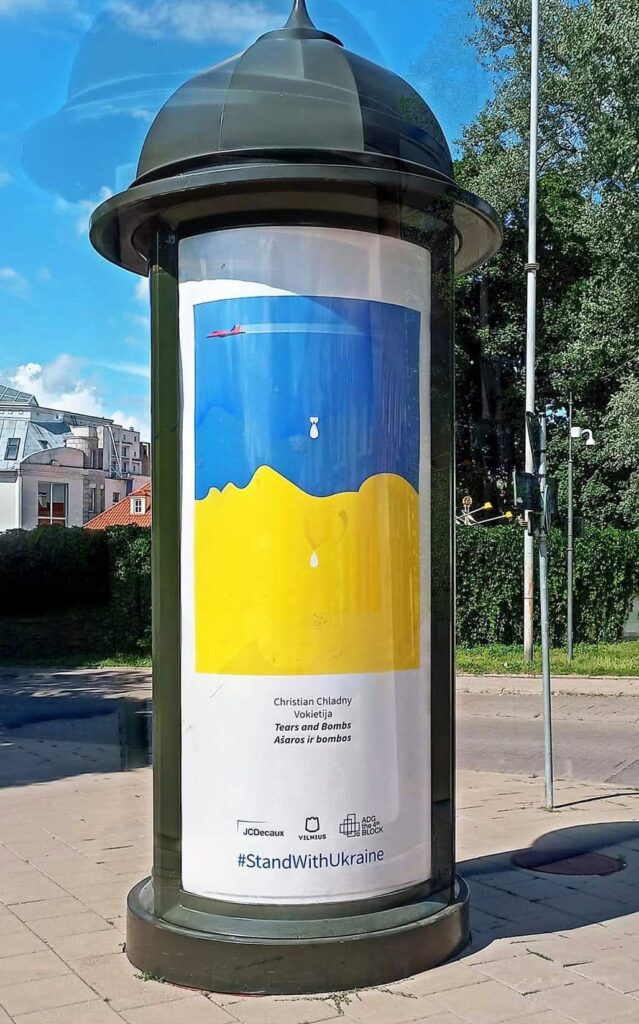
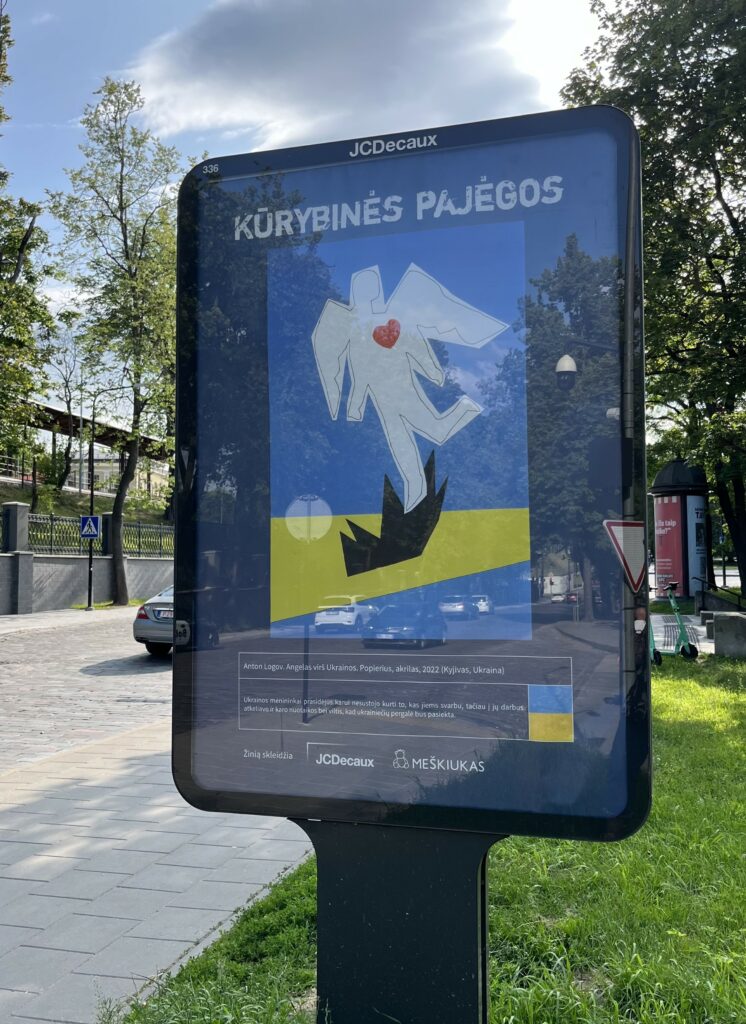
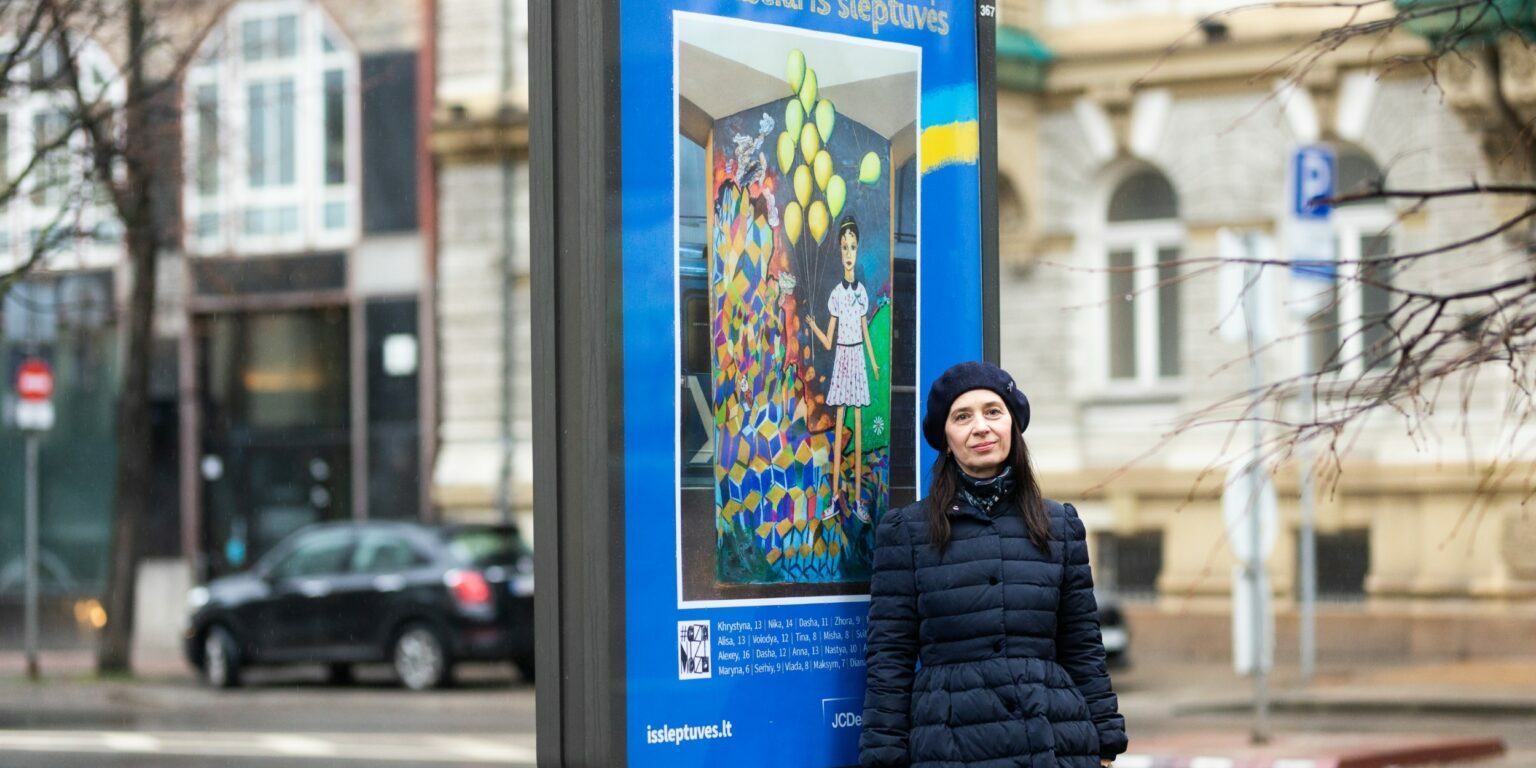
A central strategy has been to bring Ukrainian art beyond galleries into everyday public space. Working with JCDecaux Lithuania, I curated and produced three campaigns using a combined 755 city-light advertising displays between 2022 and 2025. Diaries from the Shelter brought drawings by children from Kharkiv’s Aza Nizi Maza studio, created while sheltering in the metro from Russian attacks, onto Lithuanian streets. During the 2023 NATO summit in Vilnius, a second campaign presented international anti-war posters connected with the Ukrainian graphic-design association 4th Block. In 2025, a third campaign displayed 11 works by six contemporary Ukrainian artists from Kharkiv, Kyiv and Dnipro.
Alongside these campaigns, I have developed exhibitions and cultural partnerships in Lithuania, Estonia, Germany, France and Canada. They include projects with Aza Nizi Maza and documentary photographs recording the consequences of Russian strikes on Kharkiv. These initiatives connect artists with museums, community organisations, businesses and audiences who might otherwise never encounter their work.
What remains difficult
The approach has shown how cross-sector partnerships can create platforms for expression even when conventional cultural infrastructure is disrupted. Yet a major challenge remains: moving beyond short-term gestures of solidarity towards sustained institutional support, reliable funding and fair compensation for artists and cultural professionals.
“For me, artistic resistance is not only the creation of work in response to aggression. It is also the capacity to mobilise relationships, resources and public attention around shared values, and to turn individual initiatives into lasting international cultural cooperation.” — Iryna Hrytska, independent curator
This entry is a result of the Re:Create Europe Residency Programme 2026, developed during the residency “Malta, the Mediterranean, and Beyond”, hosted by Arts Council Malta (6–13 October 2026).