
Linia Izei: From Railway Infrastructure to Cultural Infrastructure
A former railway halt in the North of Romania becomes a permanent art centre, restored and run by ARAC
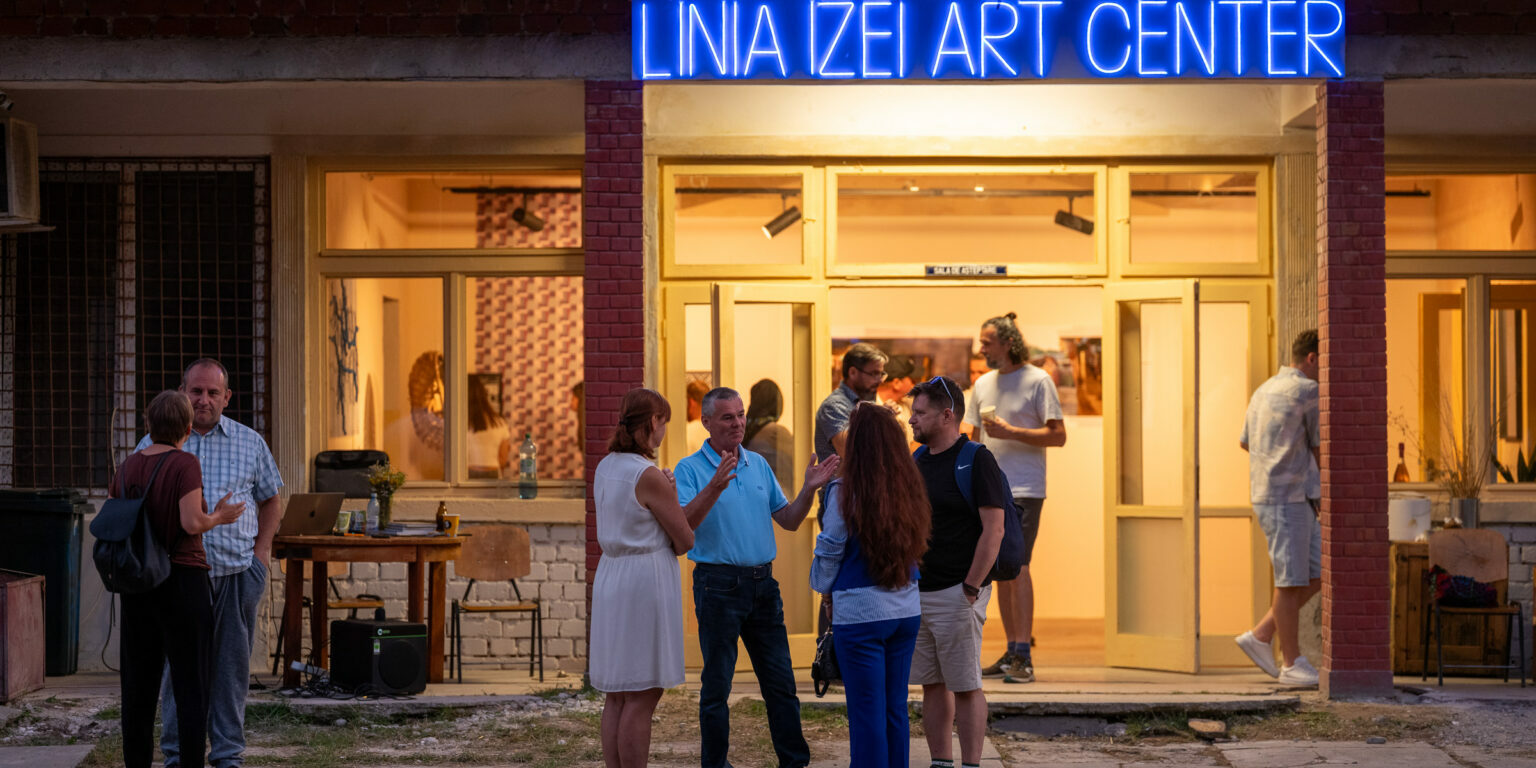
On 15 August 2026, the Romanian Association for Contemporary Art (ARAC) inaugurated Linia Izei · Halta Săcel · Art Center, a permanent space for contemporary art, artist residencies and community programmes in the former railway station of Săcel, a village in the Iza Valley, Maramureș. It is the first cultural conversion in Romania of a former station building on an active railway line: four trains still stop at the halt daily, so travellers, villagers and artists share one place.
As rail traffic declined, the building lost its original function but kept its place in the community’s memory. The project responds to two pressures: visible infrastructure that can be abandoned through administrative decisions, and the dominance of major urban centres in shaping contemporary art discourse and cultural legitimacy. Rather than following the extractive model of temporary artistic interventions in rural areas, Linia Izei establishes a permanent cultural institution in Săcel. The project also has a personal root: Anca Poterașu, founder of ARAC, was born and raised in Săcel and wanted to return a building of symbolic value to the community.
The centre grows out of the Linia Izei residency programme initiated in 2023, whose first two editions built working relationships between artists, craftspeople and residents. Through a usage agreement for the building, ARAC repaired the station and gave it a public function again, while preserving the character of the place.
The inaugural exhibition, featuring works by 16 artists, explores the relationship between visible infrastructure and living, embodied infrastructure, drawing on AbdouMaliq Simone’s concept of “people as infrastructure”. Connecting railway systems with the hydrological networks of the Iza Valley, the exhibition examines the relationships between landscape, water, local knowledge, traditional crafts and everyday practices.
The centre also hosts The Waiting Room / Camera de Așteptare, a community café in the former railway waiting room, creating an everyday meeting point for residents, travellers and visitors. Managed by Ileana Grad, a local resident, the café contributes to reconnecting the former station with community life.
The inauguration coincided with Rhythms of Continuity, a residency programme organised in the framework of Re:Create Europe, bringing together artist Kamila Stovrag and curator Lorena Marciuc, whose research explored the connections between water, landscape, sound and resilience.
Through exhibitions, residencies and community programmes, Linia Izei aims to establish a lasting cultural infrastructure that connects contemporary art with local heritage, knowledge and community participation.
From residency to institution
The centre grows out of Linia Izei, a residency programme ARAC began in 2023. The third edition, in 2026, gave the programme a home of its own: a repaired station building, an exhibition produced for the site by 16 artists, a permanent place for encounter, and a framework that can continue beyond a single edition.
The experience of these three years has confirmed an idea: when a constant framework for encounter and participation exists, people come and begin to use it. For the people of Săcel, the station is tied to departures, returns, waiting and the history of the families who used the railway.
Through the connection of local practices with international artistic networks and European initiatives such as Re:Create Europe, Linia Izei positions rural spaces as equally relevant sites for contemporary artistic production, research and cultural debate.
Challenges and lessons learned
The exhibition
The inaugural exhibition of the new art centre, bringing together works by 16 artists, explores the rupture between visible infrastructure, which can be abandoned through administrative decisions, and living, embodied infrastructure, described by AbdouMaliq Simone through the concept of “people as infrastructure”. From this perspective, the functions of transport, connection, and maintenance are displaced into relationships and repeated gestures, persisting even after their material support has disappeared.
The full curatorial text is available as an attachment to this entry.
The Waiting Room / Camera de Așteptare
In the station’s former waiting room, The Waiting Room (Camera de Așteptare) now operates as the first specialty café in the Iza Valley and one of the permanent public functions of the new centre. It preserves the memory of the room’s railway use and introduces an everyday space into the art centre. Locals, travellers and visitors can come into the station for a coffee, for the exhibition, or for both, and this kind of use helps keep the building constantly present in the life of the community.
Visitors are welcomed by Ileana Grad, a resident of Săcel who trained as a barista in Bucharest. She is the caretaker of the exhibition space, overseeing both the gallery and the café, and contributes to transforming the former railway station into a place of dialogue between the local community and contemporary culture.
I never imagined that, at the age of 53, I would embark on an entirely new profession. When Anca told me about the transformation of the railway station in Săcel into an art centre, I felt that I, too, could become part of this story. Today, I am preparing to become both a caretaker and a barista in a place that is bringing back to life a building I have passed by so many times. For me, this is not just a career change, but also an act of courage — proof that it is never too late to learn something new and contribute to the future of your community. — Ileana Grad, Săcel resident (testimony collected before the opening)
Rhythms of Continuity: a Re:Create Europe residency
The inauguration on 15 August coincided with the final presentation of Rhythms of Continuity, a Re:Create Europe residency programme. Artist Kamila Stovrag created Carried by the Iza River (2026) with a local woodworker, and curator Lorena Marciuc explored the Iza Valley through sound. Their work and testimonies are presented in the attached residency report.