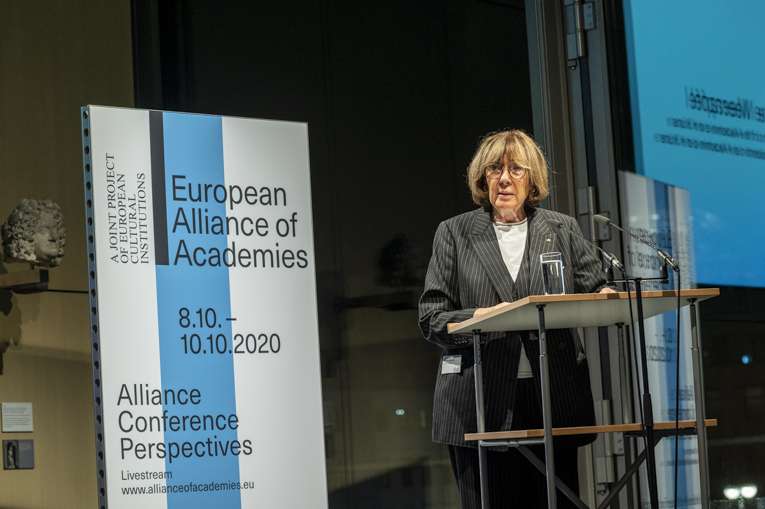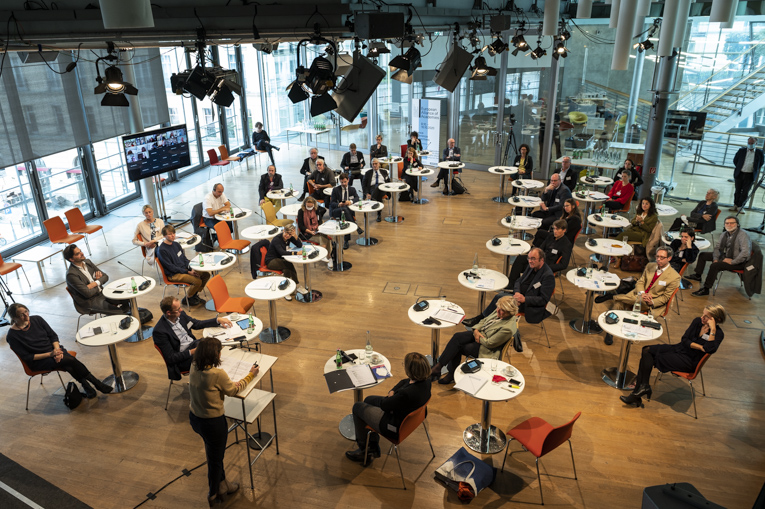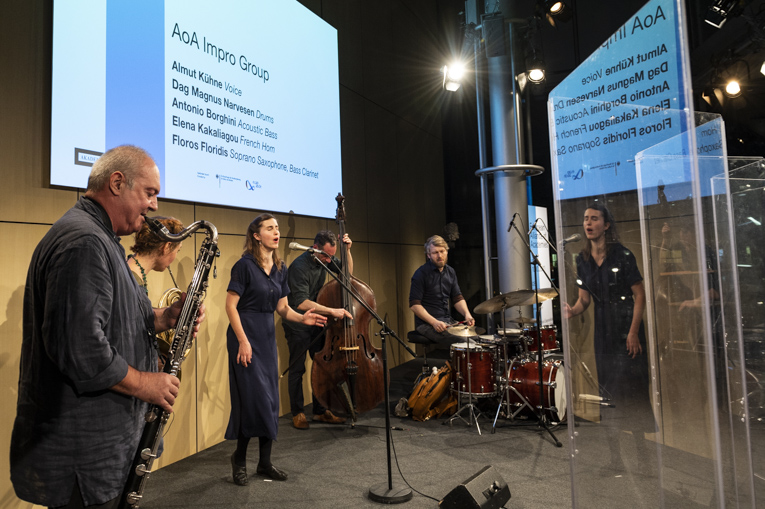
Founding of the European Alliance of Academies in 2020
Building a solidarity network for artistic freedom across Europe
The network
The European Alliance of Academies is a network of art academies and cultural institutions across Europe, a transnational collaboration that advocates for the freedom of the arts. Through new forms of cooperation, the participating institutions support each other and show solidarity whenever needed. Its 75 partner institutions include renowned art academies and national cultural-policy actors, but also smaller cultural institutions.
The institutions that committed to this idea come from almost every EU member state and beyond – a strong signal of the need for a solidarity-based alliance, especially in view of crises such as the rise of right-wing nationalism, the outbreak of wars and the ongoing climate crisis, and their political and cultural consequences.
Origins
With a joint founding manifesto, the members of the Alliance formulated their commitment to the European project and outlined concrete forms of cooperation: the transnational exchange of information on cultural policy developments, support for the exchange of artists facing restrictions, and joint advocacy for artistic freedom and institutional autonomy.
Former President of the Akademie der Künste, Prof. Jeanine Meerapfel, had pursued the idea of a European solidarity network for several years. In 2020, on the occasion of the German EU Council Presidency and with the support of the then Federal Government Commissioner for Culture and the Media, Prof. Monika Grütters, the Akademie der Künste was able to initiate the Alliance. At its founding conference, the network was conceived not only as a response to existing threats, but as a structure through which institutions could learn from one another, develop possibilities for joint action and build solidarity across borders.
Networks as a strategy for resilience
Building networks can itself constitute a strategy for artistic resilience. Individual artists and institutions can become particularly vulnerable when political pressure leaves them isolated within their local contexts. Networks can counter this isolation by connecting institutions, circulating information, raising awareness in a broader public sphere and providing access to knowledge, partners and platforms beyond national borders. They can also enable coordinated responses when threats emerge and amplify individual concerns through a collective voice.
A lasting infrastructure
The founding of the European Alliance of Academies shows how solidarity networks and transnational cooperation can create long-term infrastructure for resilience. Rather than responding to one particular crisis, the network establishes relationships and mechanisms that can be activated in different situations. Its growth from 60 founding members to 75 partners, and the joint initiatives developed by its members – among them Re:Create Europe, within which this Atlas of Artistic Freedom was created – demonstrate how such networks can provide a lasting basis for cooperation and collective action.
Founding Manifesto (2020)
In some European countries we are currently experiencing cultural policies that understand art and culture only nationally and are increasingly regulating them. As a result, the autonomy of many academies, museums and cultural institutions is being jeopardized. We would like to do something against this development: So far 60 art academies and cultural institutions from countries of the European Union, Great Britain and Norway, are joining to form an “Alliance of Academies” on the initiative of the Academy of Arts, Berlin. Together we stand up for the right to freedom of art throughout Europe, which is stipulated in Article 13 of the Charter of Fundamental Rights of the European Union...
Resources: